LLM Trackers
← All reviews

The 7 best AI visibility tools for SEO in 2026, ranked (with receipts)

By Jeffrey Kranz2025-11-24Unscored roundup

Article Summary

Overthink Group runs a hands-on comparative test of seven AI visibility tools and ranks them by how well they support real SEO and content strategy work.

Overthink Group evaluates seven major AI visibility tools against a detailed methodology built around a hypothetical B2B SaaS client project. Instead of relying on marketing copy, the article scores tools on segmentation architecture, parameter control, competitor comparison, sentiment analysis, and how much manual reporting work they save real strategists.

The piece is notably skeptical about the category as a whole. It argues that the top tools are useful for approximating AI visibility and cutting down manual work, but still require careful prompt design, thoughtful reporting, and human interpretation. Profound leads as the most well-rounded option, Scrunch stands out on segmentation, Peec wins on affordability, Rankscale excels at sentiment analysis, and Ahrefs Brand Radar lands last because its methodology is hard to operationalize for many teams.

Company Ratings

7 tools covered in this review.

-
Mentioned

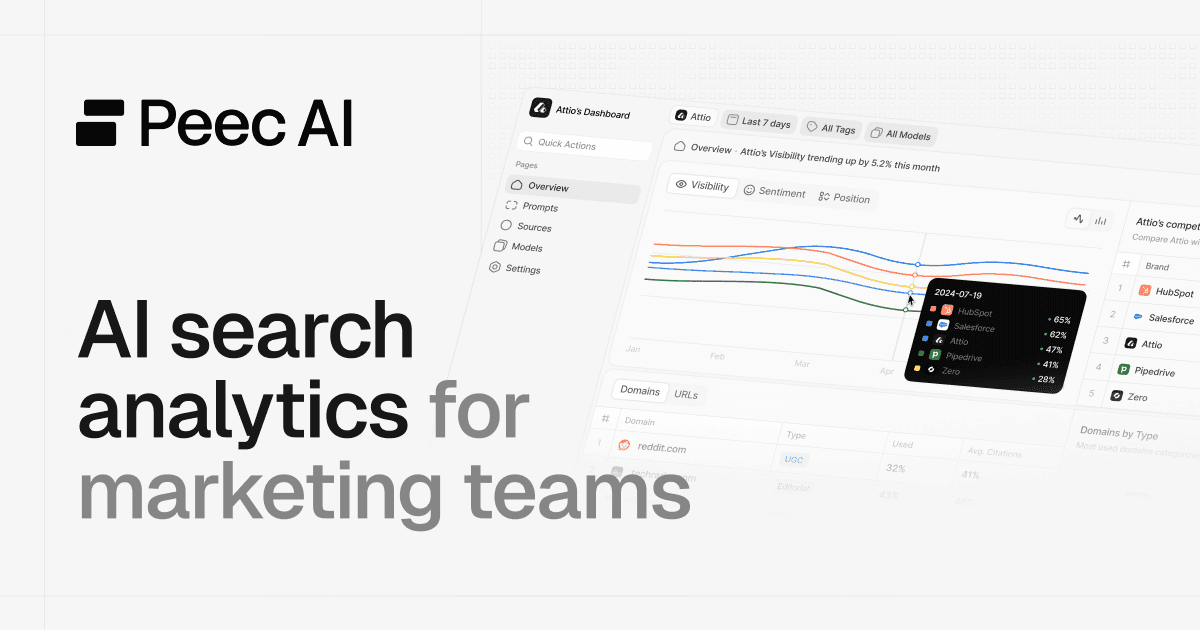
Ranked first for being the most complete and well-rounded tool, with strong segmentation, URL watchlists, and useful AI response analysis.

Pros

strongest overall balance of featuresuseful URL citation watchlistsstrong segmentation and drill-down reporting

Cons

sentiment data can be polluted by unhelpful generated prompts

Noteworthy

best overall according to Overthink's task-based rubric
-
Mentioned

Ranked second and praised for having the best segmentation architecture and highly useful filtered reporting.

Pros

strongest tagging and segmentation setuphelpful automatic prompt labelinggood multi-domain entity support

Cons

weaker drill-down analytics than the top entry

Noteworthy

best in class for segmentation architecture
-
Mentioned

Rated as a solid value option with unlimited seats and countries, but less refined data labeling and drill-down depth.

Pros

affordable for broader team usageunlimited seats and country tracking

Cons

automatic labeling often needs manual cleanup

Noteworthy

strong budget-conscious pick in the roundup
-
Mentioned

Ranked fourth and singled out as the strongest sentiment-analysis tool among the group.

Pros

standout sentiment analysisuseful competitor comparison views

Cons

clunkier segmentation setup than top rivals

Noteworthy

best for sentiment analysis according to the review
-
Mentioned

Positioned as an affordable and approachable tool with strong parameter control, but limited multi-tag reporting.

Pros

good entity and branded-term setupapproachable pricing and UX

Cons

segmented reporting is limited and clunky

Noteworthy

better for basic monitoring than sophisticated reporting
-
Mentioned

Ranked near the bottom because the article sees a strong vision but weak execution and too much AI-generated noise in reports.

Pros

visually appealing reportsbroad SEO ecosystem context

Cons

weak parameter controlnoisy and often misleading AI-generated recommendations

Noteworthy

described as strong vision, weak execution

Ranked last because its real-prompt methodology is interesting in theory but too limited and hard to use for many B2B SaaS visibility workflows.

Pros

ambitious real-prompt methodologystrong query engine and historical records

Cons

sparse data outside Google surfacesmethodology is difficult to operationalize

Noteworthy

best vision but weakest practical utility in this review